

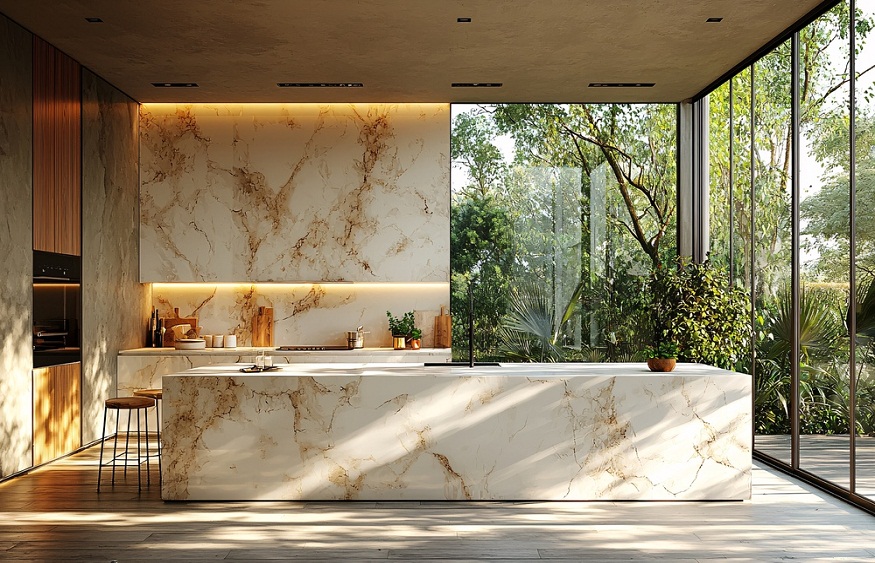
Stone countertops are very common nowadays. In newly renovated areas, the kitchens consistently feature lustrous quartz or granite. Perhaps they feature marble surfaces. This rapid transformation has substantial reasons underlying it.
The Appeal Goes Beyond Beauty
Here’s the thing about stone. In the best possible way, it’s unpredictable. The patterns here started happening naturally millions of years back. You can’t really get that authenticity from stuff made in bulk. The older stone gets, the better it becomes. Remember those retro laminate countertops from the nineties? They would often bubble up after a few years of use. Stone? It’s totally still and super steady, like a rock – which makes sense since it’s actually made of one. The occasional minor scratches give it a well-used appearance. Think of it like a leather jacket that becomes more appealing with age.
Read More : Boosting Productivity: The Role of Industrial Power Stations in Modern Factories
Practical Benefits Drive Decisions
Let’s talk spills. Red wine on white quartz? No problem. Grab a paper towel. Done. Try that with old butcher block counters. You’d be sanding and oiling for hours. Hot pans are another story. Heat poses no challenge to granite. Take a cookie sheet directly out of a 400-degree oven and set it down. No scorch marks. No melted surfaces. Just stone doing what stone does: staying cool under pressure. Cleaning takes seconds. Soap. Water. Wipe. That’s the whole routine. Meanwhile, tile counters with their grout lines trap every crumb and splash. Who has time for that?
Home Values and Market Trends
Real estate agents love stone surfaces. They photograph well. They show buyers the owner didn’t cut corners. Many agents price homes with granite counters about 8% higher than similar houses without them. They sell faster, too. Stone has spread through houses like wildfire. First kitchens. Then bathrooms. It’s now appearing in mudrooms, home offices, and even garages. Homeowners sometimes opt for limestone in their workshops, saying it creates the finest workbench they’ve ever had.
Technology Enhances Natural Stone
The way stone gets cut now is wild. Lasers and water jets cut through three-inch-thick materials with ease. The edges are so smooth, they appear to have been formed that way. Twenty years back, installation took weeks. Now? Two days, maybe three.
Options have exploded too. Marble countertops come in various styles. Choices range from plain white Carrara to striking black with gold streaks. Bedrock Quartz and similar businesses create synthetic substitutes by mixing crushed rock with polymers. They do this for increased resilience. Pick any color. Any pattern. Someone makes it.
Sealing technology changed everything. Old stone needed resealing every year. New sealers last a decade or more. Some stones come pre-sealed from the quarry. Set it and forget it.
Environmental Considerations Matter
Stone comes from the ground. It goes back to the ground. No chemicals. No off-gassing. Just rock. Engineered options utilize discarded stone fragments that would otherwise be wasted. They are mixed with a bit of resin by the manufacturers. For the most part, they remain natural. They still last forever. Some brands incorporate recycled glass and mirrors into the mix. Sparkly and sustainable. The carbon footprint shrinks when considering lifespan. Install stone once. Keep it fifty years. Compare that to replacing laminate every decade. The math becomes clear pretty quickly.
Read More : 5 Long-term Benefits of Installing a Water Filter for Home
Conclusion
Stone surfaces hit the sweet spot. They look amazing. They work hard. They last forever. They don’t harm the planet. Sure, the initial cost stings a bit. But divide that by thirty or forty years of use? It’s pennies per day for something that gets touched constantly. The real question isn’t why stone is trending. It’s why anyone settles for anything else.